

Product
LiveOrrery
A knowledge-graph extractor that keeps its receipts: people, organizations, places and ideas pulled from your documents, every relation tied to its sentence.
Facts
- Status
- Live
- Platform
- Web app + mobile
- Flows
- Extract · Explorer · Resolve
- Model
- orrery-ie
- Entity types
- Person · Org · Place · Idea
- Exports
- JSON · CSV · Neo4j
- Year
- 2026
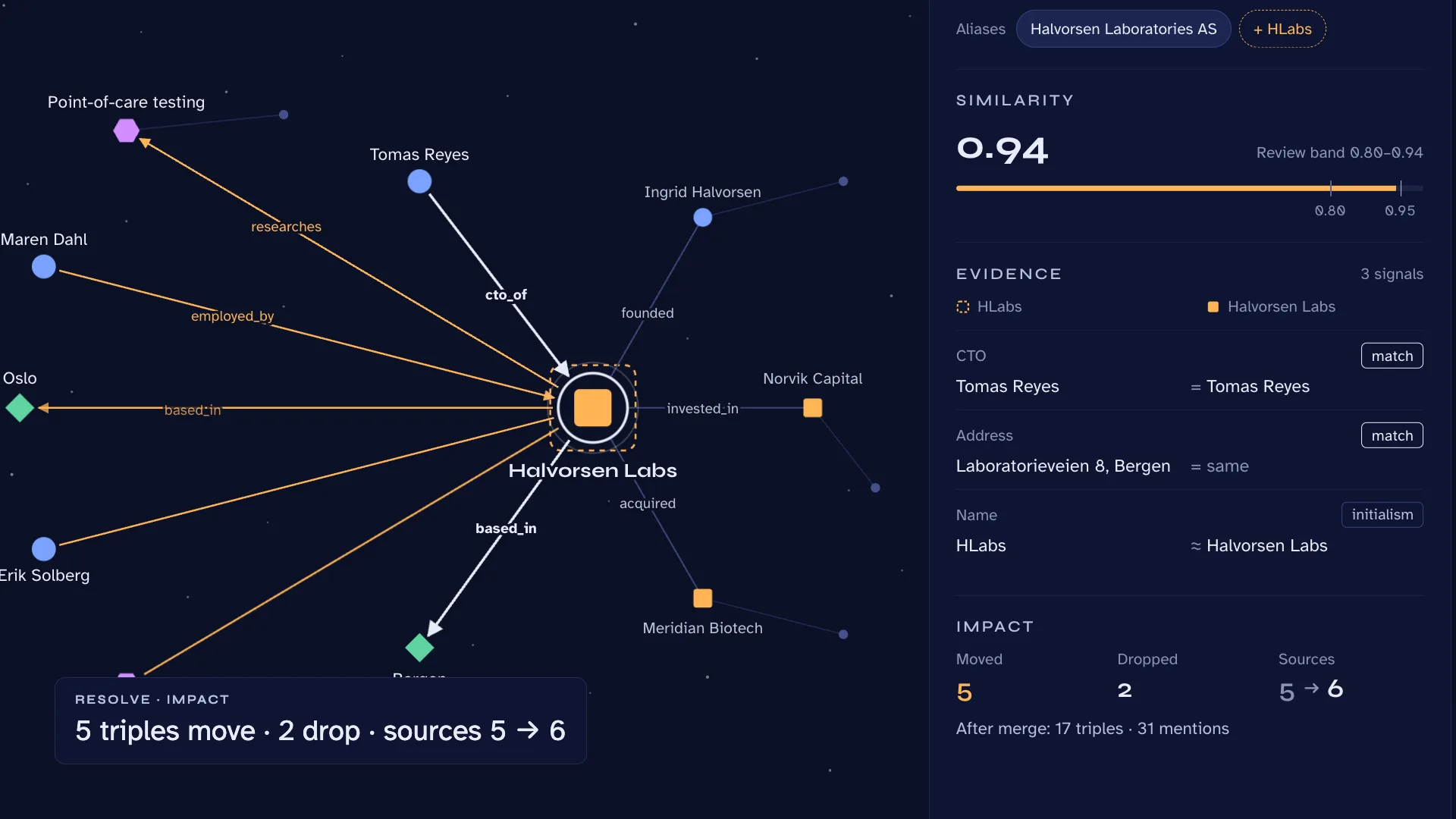
FIG. 01 / PRODUCT FILM
Muted preview · play with sound for the full cut
Who it's for
Analysts and researchers working through a diligence or research file — memos, decks, board minutes, patents, interview notes — who need to map who is connected to whom and show the sentence behind every link.
The problem
Research and due diligence mean reading stacks of memos, decks, minutes and patents to work out who founded what, who invested, who reports to whom. Tools that pull entities out of text usually hand back a pile of names you can't check: the same company turns up under three spellings, and no one can see which sentence a relation came from.
The product
Orrery reads each document chunk by chunk, marks the people, organizations, places and ideas it finds, and extracts the relations between them as subject–predicate–object triples, each with a confidence score and the exact sentence and page it came from. Pick any entity and the graph arranges itself around it, filterable by type and relation. Names that clearly match merge on their own; likely duplicates wait in a review queue with their evidence and a preview of what a merge changes, and a person decides. The finished graph exports to JSON, CSV or Neo4j.
FIG. 02 / HOW IT WORKS
How it works
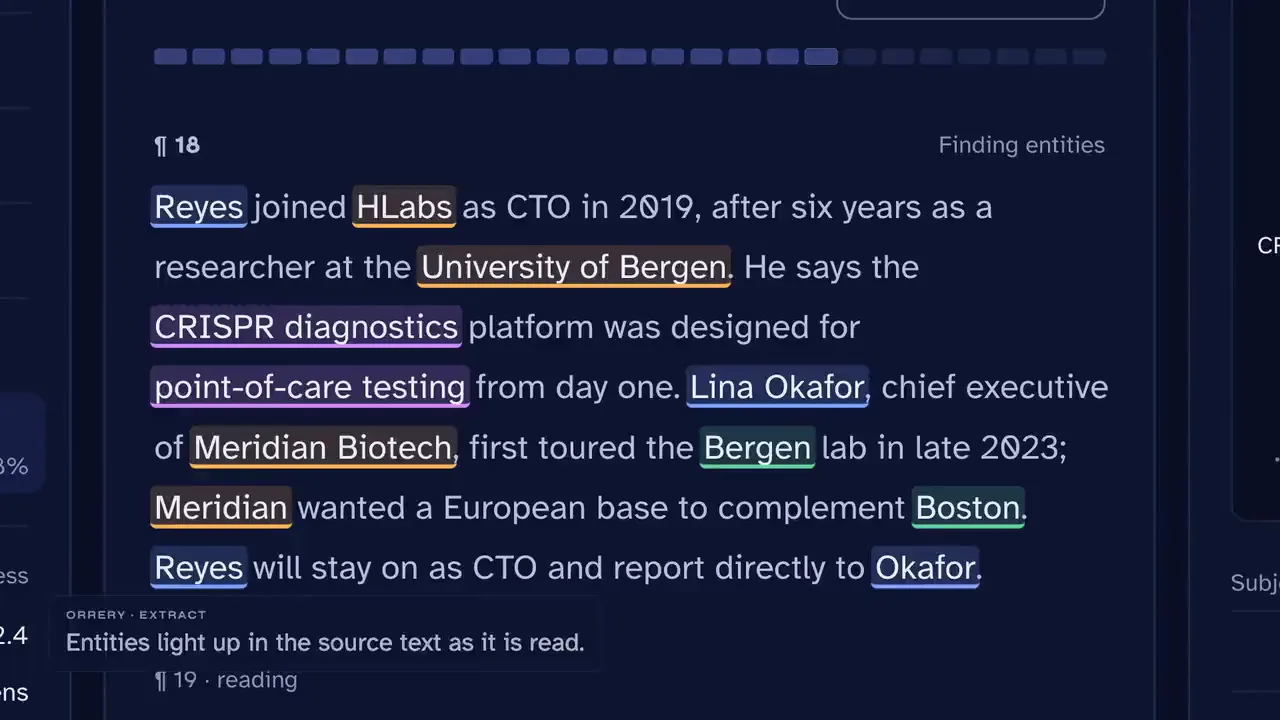
Step 1: Extract
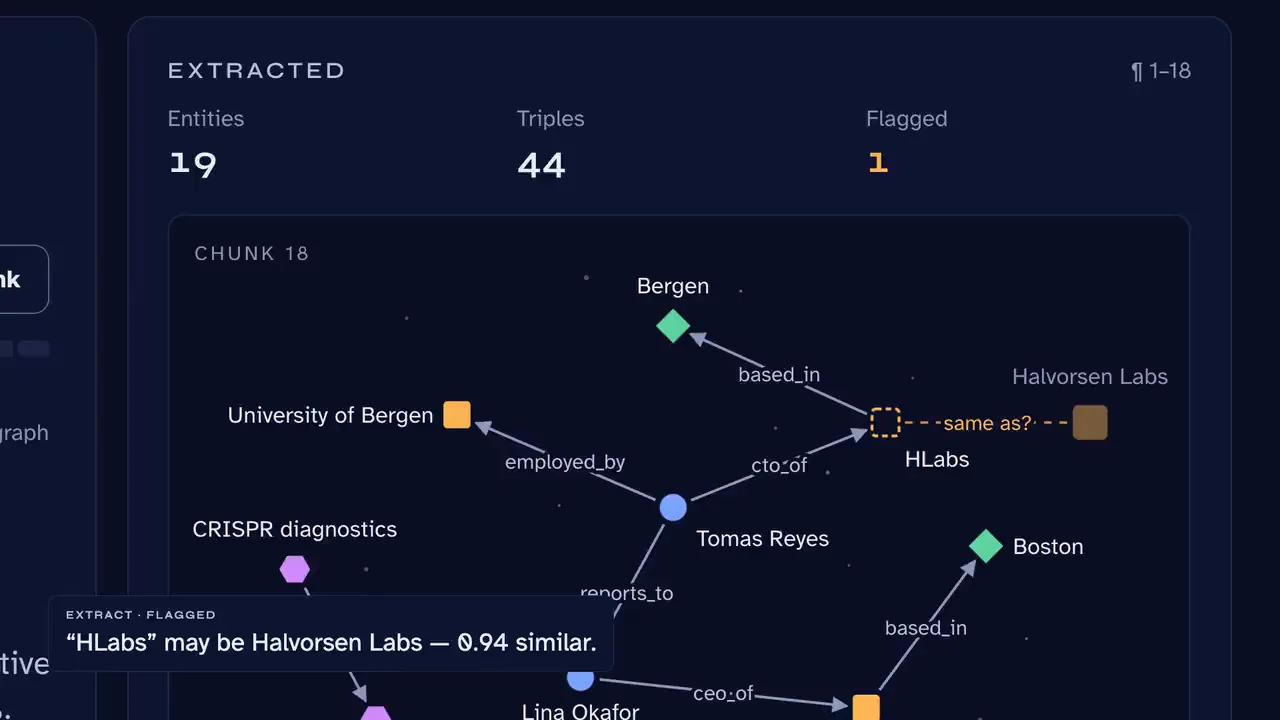
A document becomes a graph, chunk by chunk. Entities light up in the source text as it is read — people, organizations, places and ideas, each with its own colour and shape — then every relation is drawn the moment its sentence is parsed, and a likely duplicate is flagged on the spot.
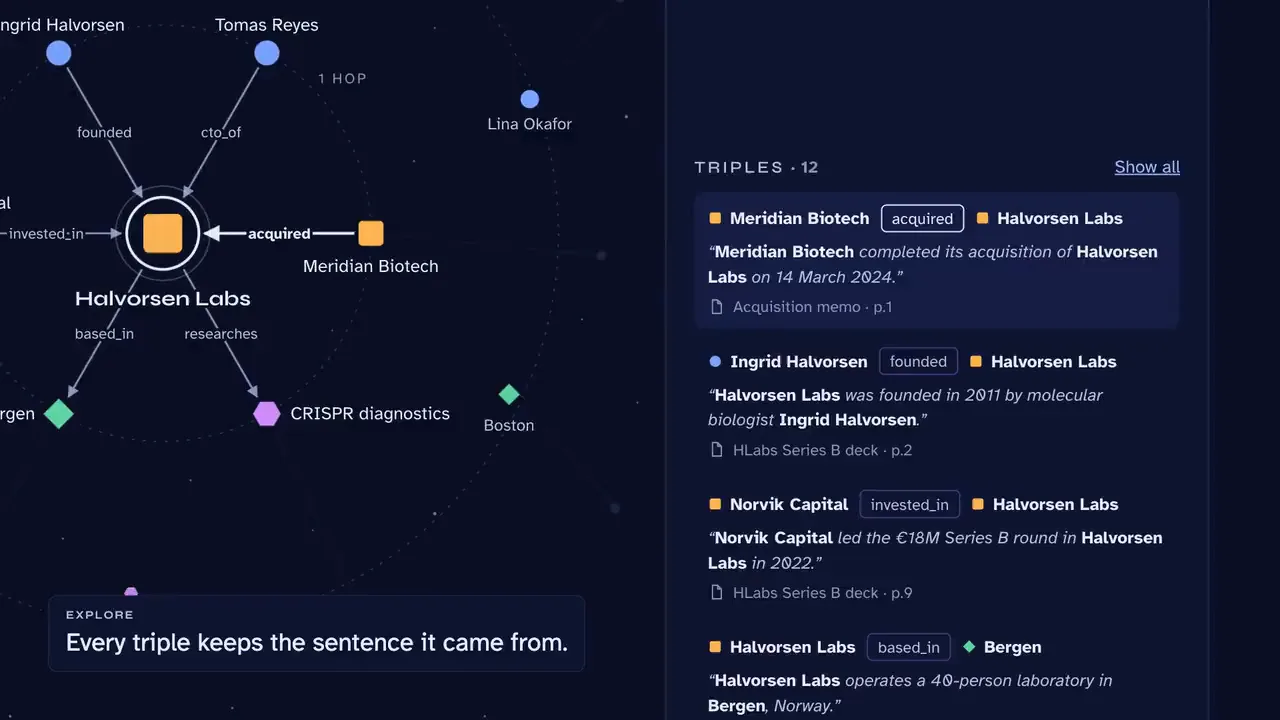
Step 2: Explorer
Pick any entity and its world arranges itself around it: direct relations on the first ring, second-hop ones further out. Every triple in the side panel keeps the sentence it came from, with its document and page, so each edge can be checked in one click.
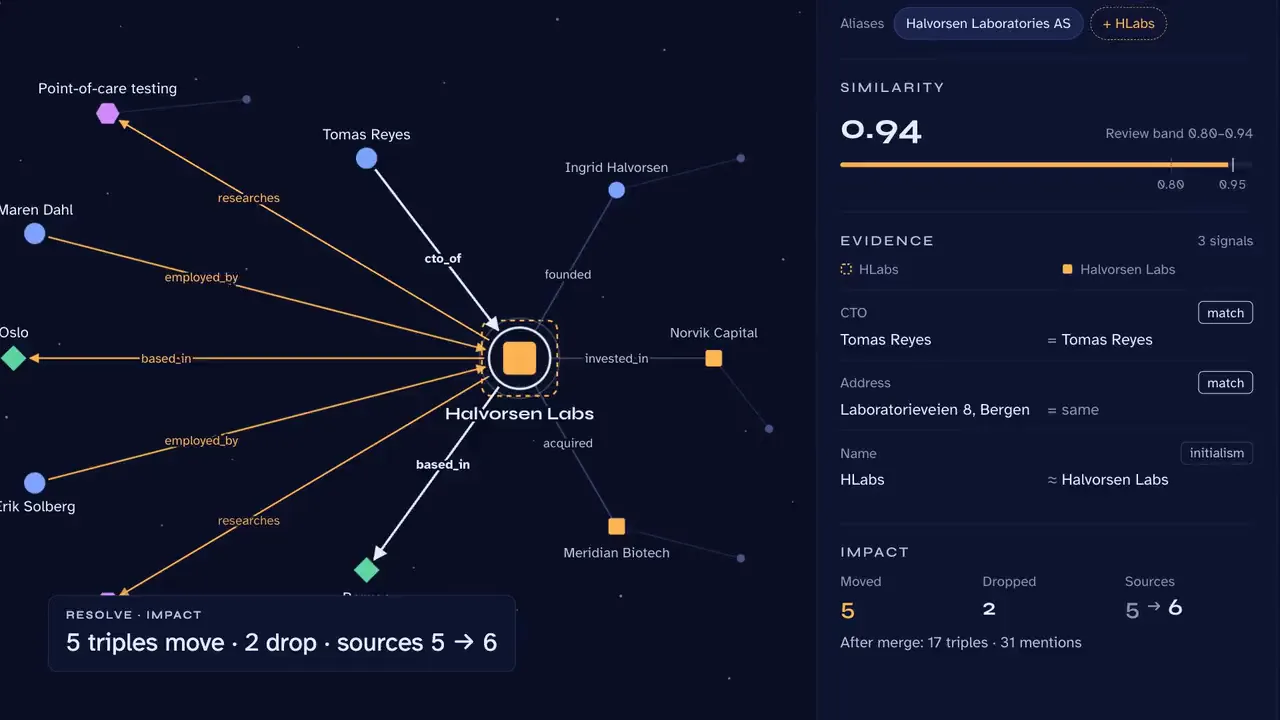
Step 3: Resolve
Decide whether two names are one entity with the evidence in view: the same CTO, the same street address, an initialism. Before anything is merged, the preview shows which relations move over and which drop out — and keeping the two apart is one click.
FIG. 03 / SCREENS
The product, screen by screen
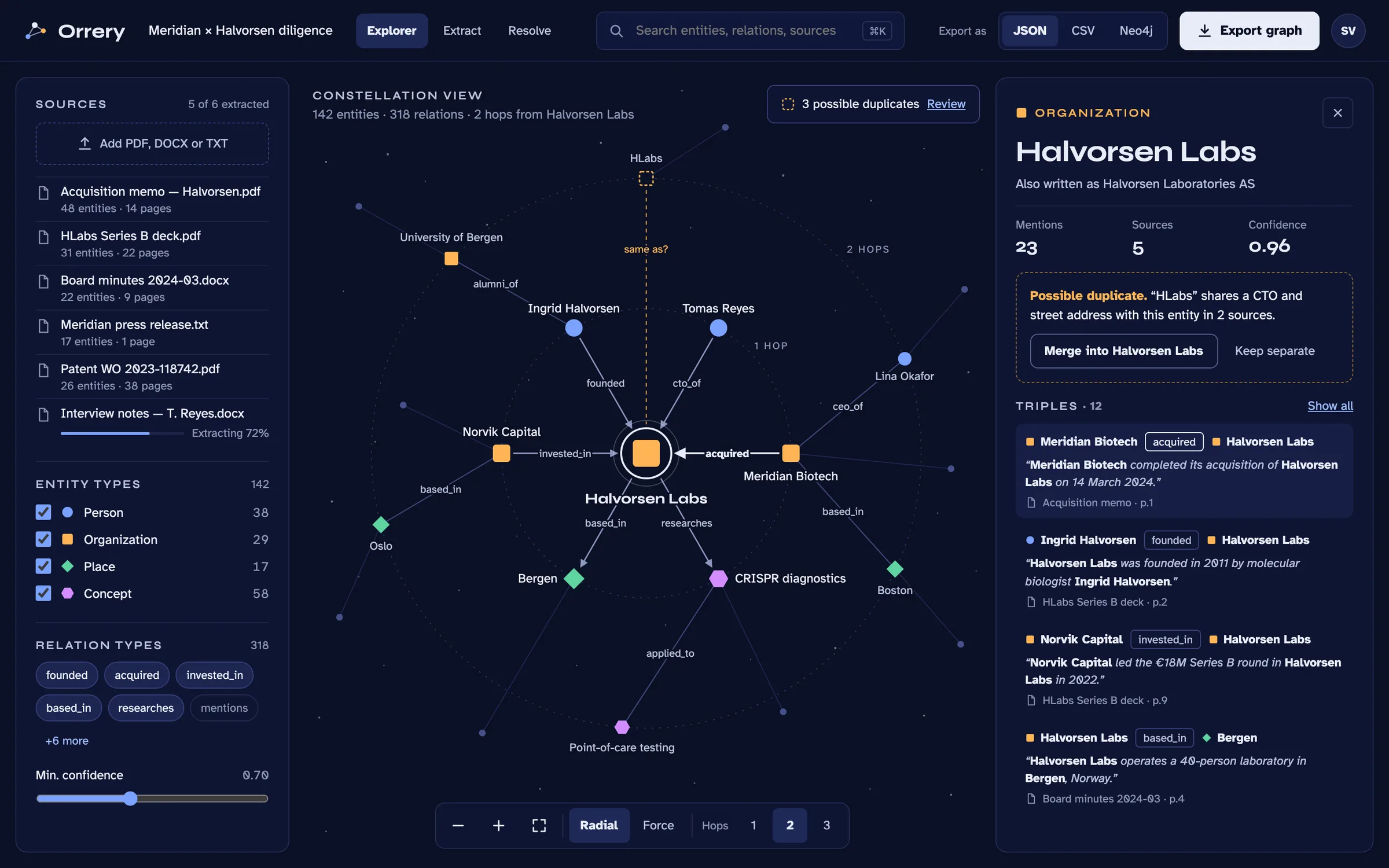
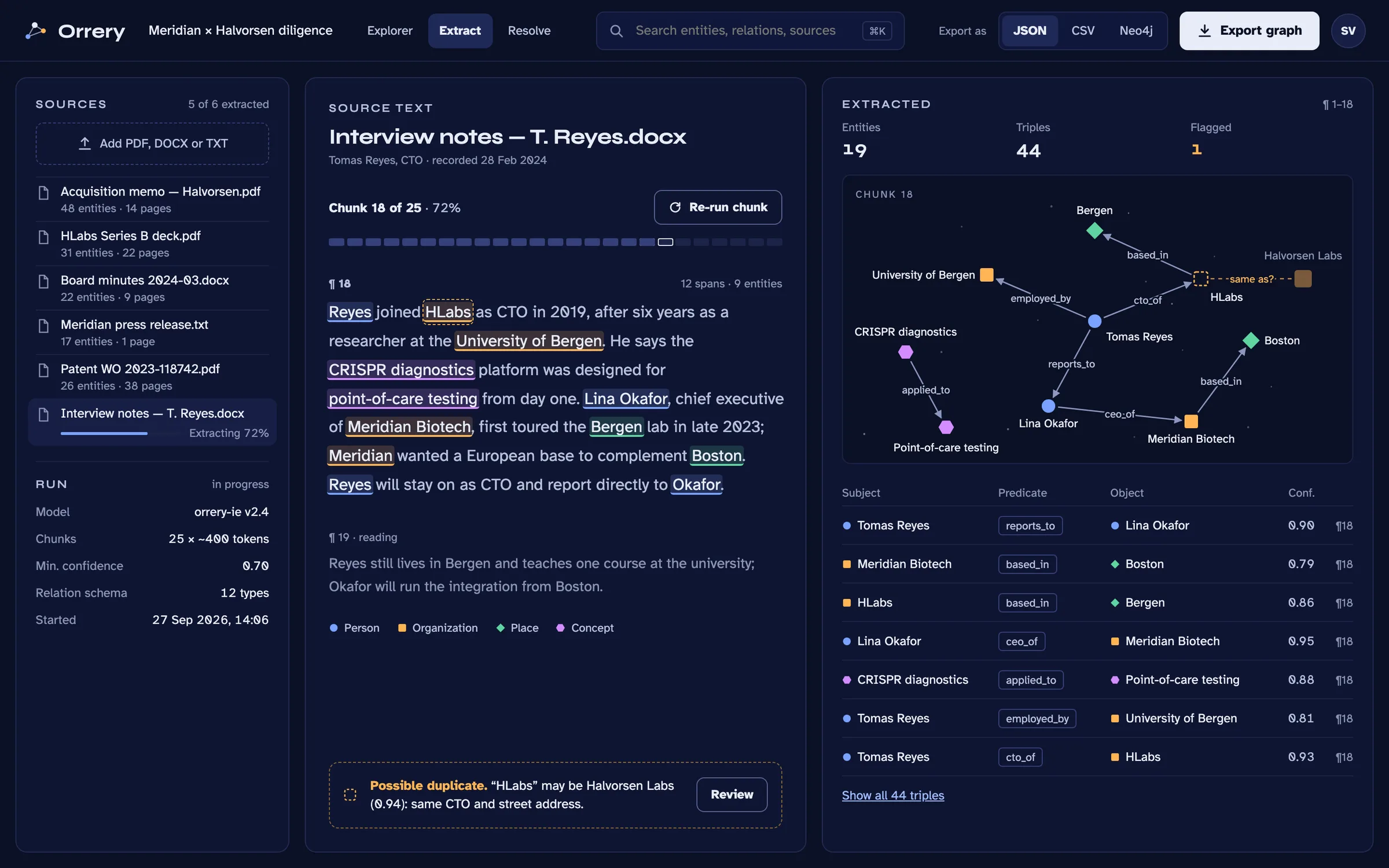
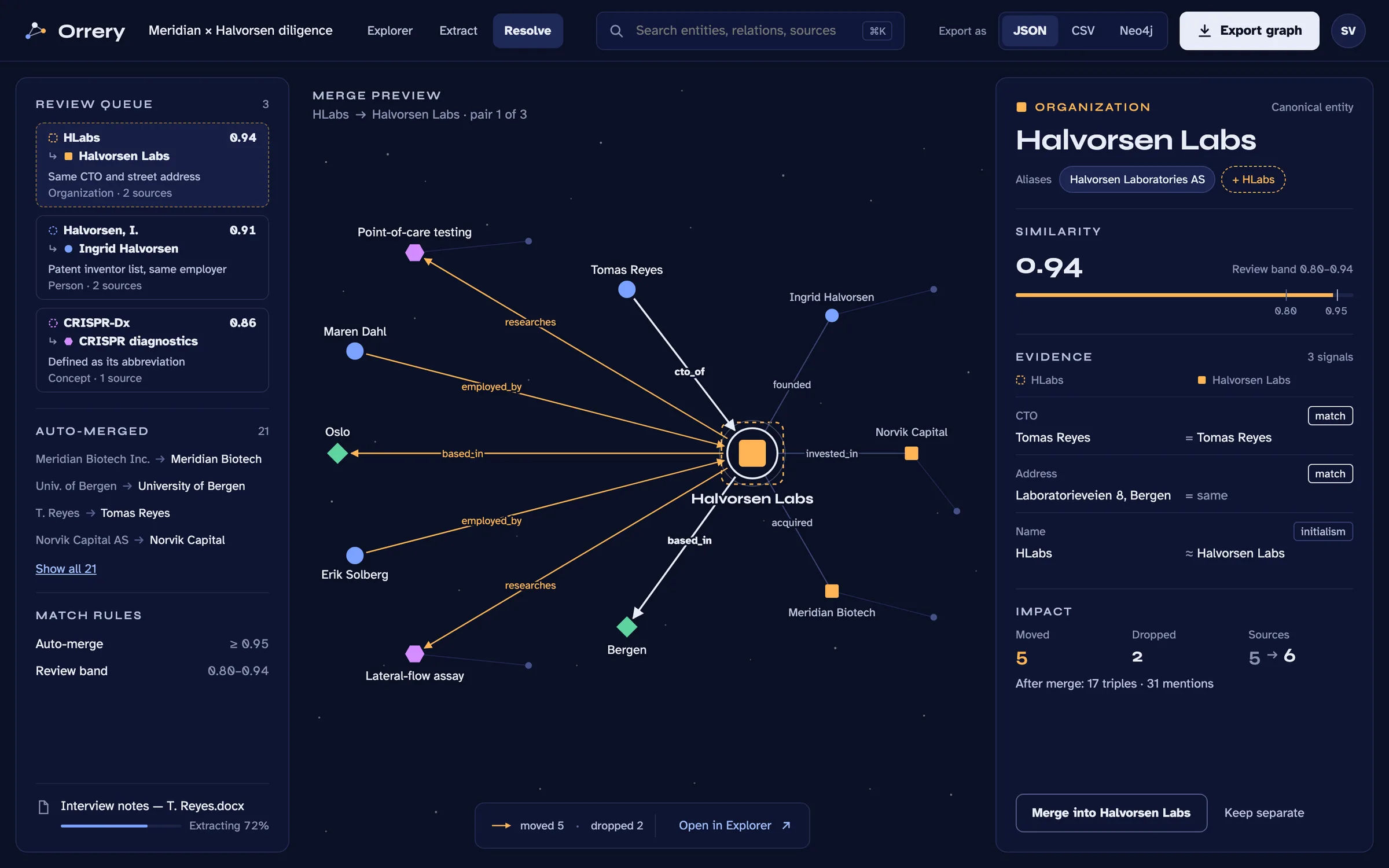
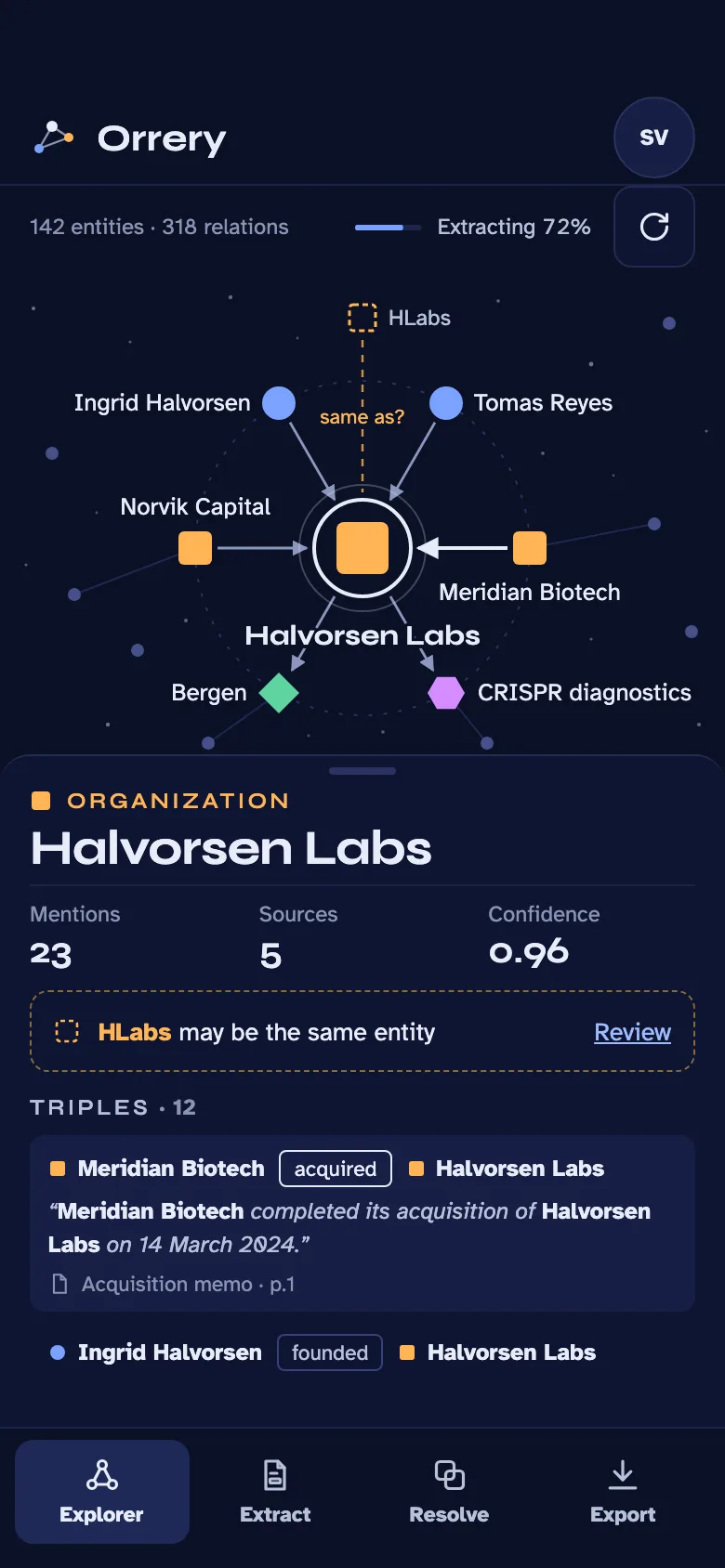
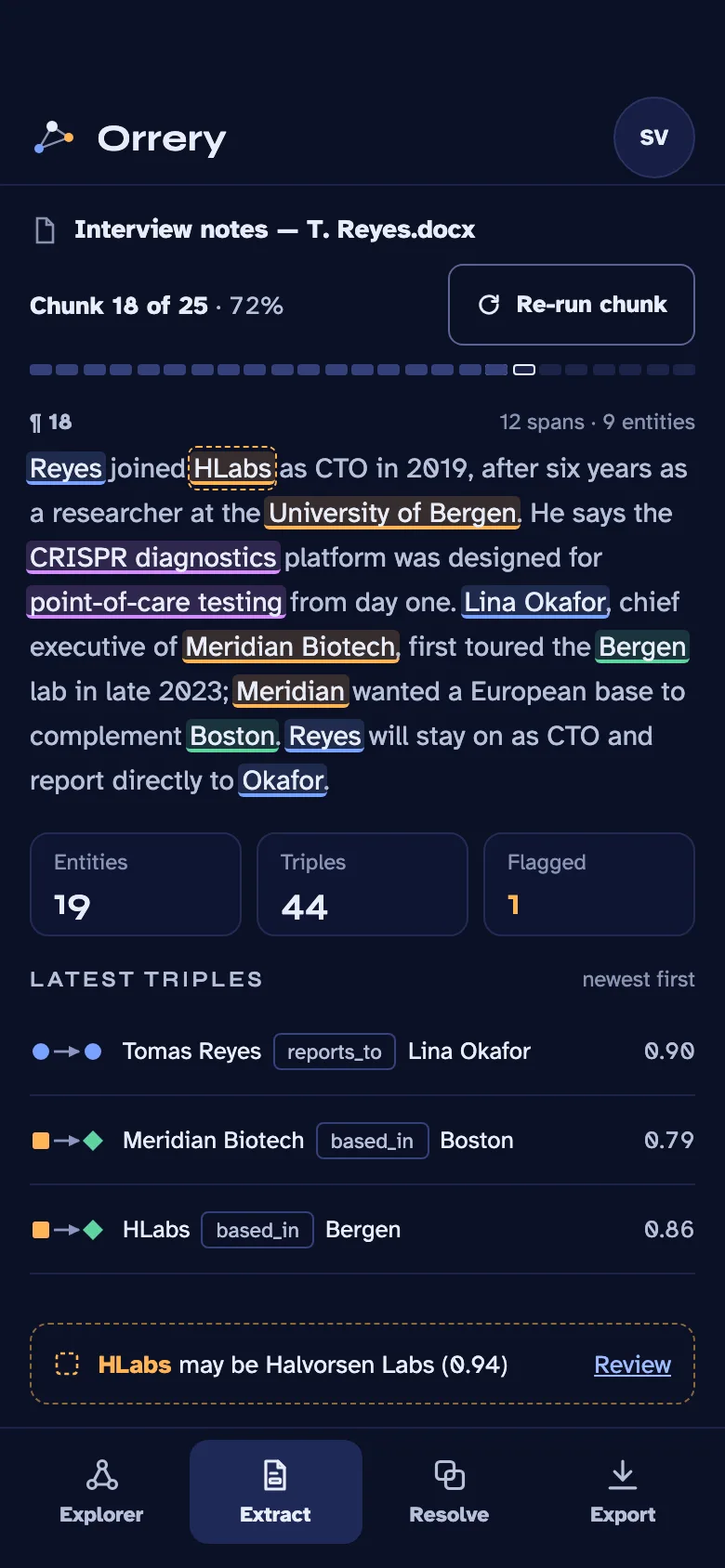
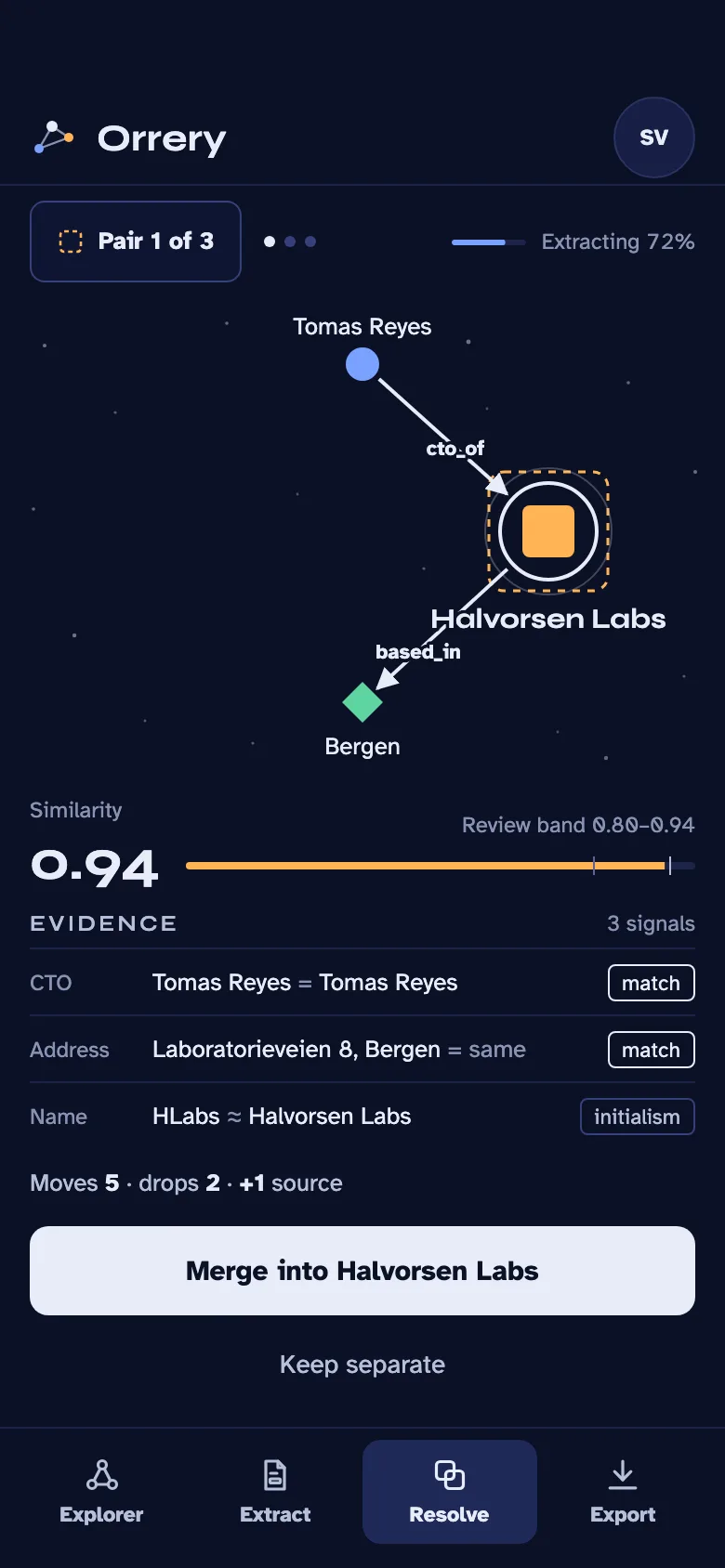
FIG. 04 / DESIGN DIRECTION
Design direction
A constellation on a deep navy sky. Syne is kept for display — the wordmark, entity names and the numbers that matter — while Atkinson Hyperlegible, a typeface built for legibility, carries the dense evidence: sentences, sources and labels. Every entity type pairs a colour with a shape (person circle, organization rounded square, place diamond, idea hexagon), so the graph still reads without colour. Relations are thin lines with small arrowheads, and the selected one is drawn in white.
Palette
- Night sky#0B1026
- Person#7AA2FF
- Organization#FFB454
- Place#5FD4A0
- Idea#D38CFF
Type
- Syne
- Display: the wordmark, entity names, key numbers
- Atkinson Hyperlegible
- Everything else: sentences, sources, labels
FIG. 05 / MOTION LANGUAGE
Motion language
“Cooling constellation”: the graph is discovered, not drawn. Words light up in the text and become stars; two stars are connected only once both have settled, so no line ever floats loose; the layout cools gently into place rather than bouncing, and a merge glides one entity onto the other. Calm, dark and precise — no scan lines, pulses or glow — and once it settles, only the extraction progress creeps forward.
Related systems
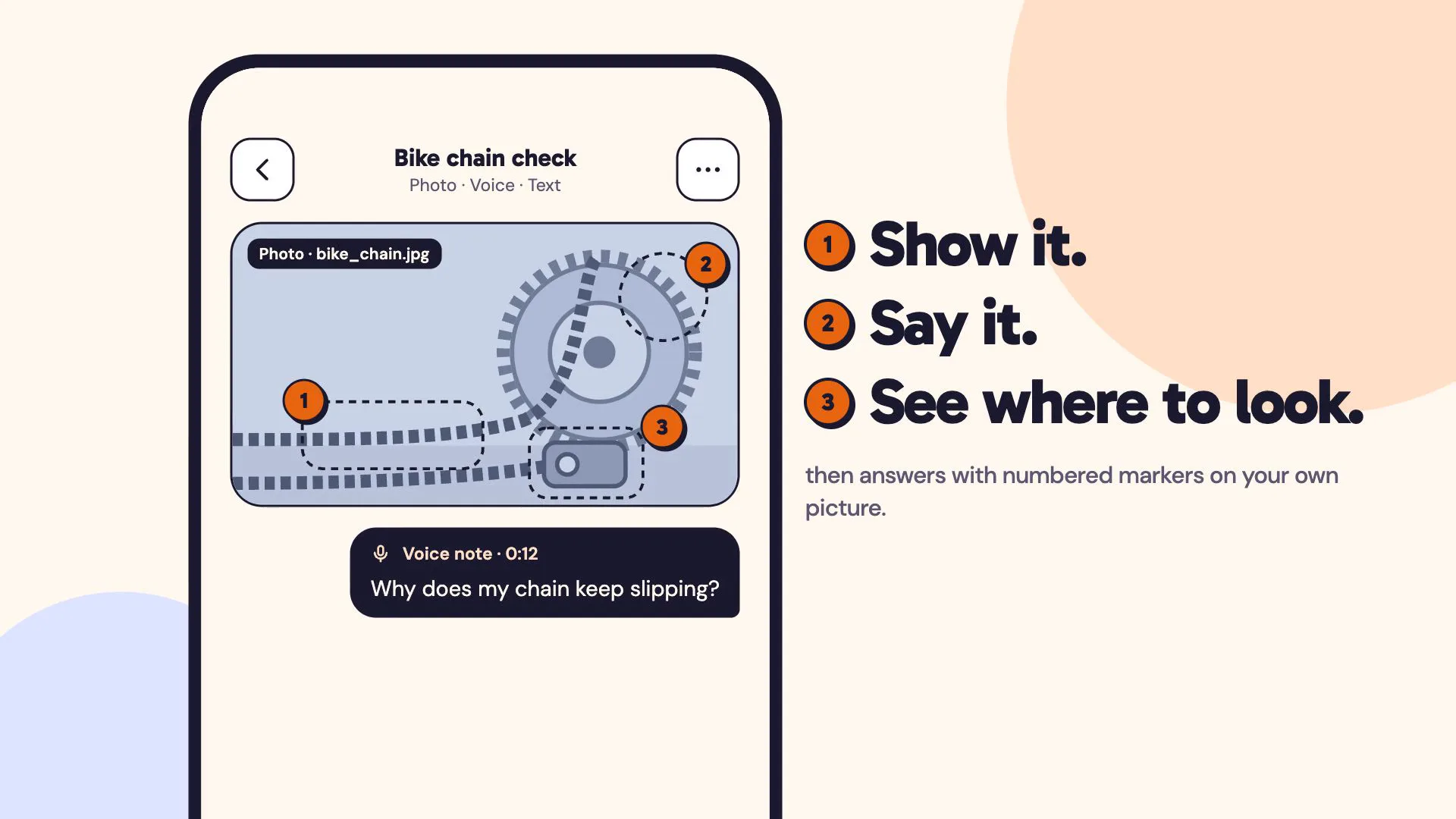
Kiko
LiveA multimodal AI assistant you can show things to: a photo, a voice note and a line of text in one ask, answered with numbered markers on your own picture.
Mailsort
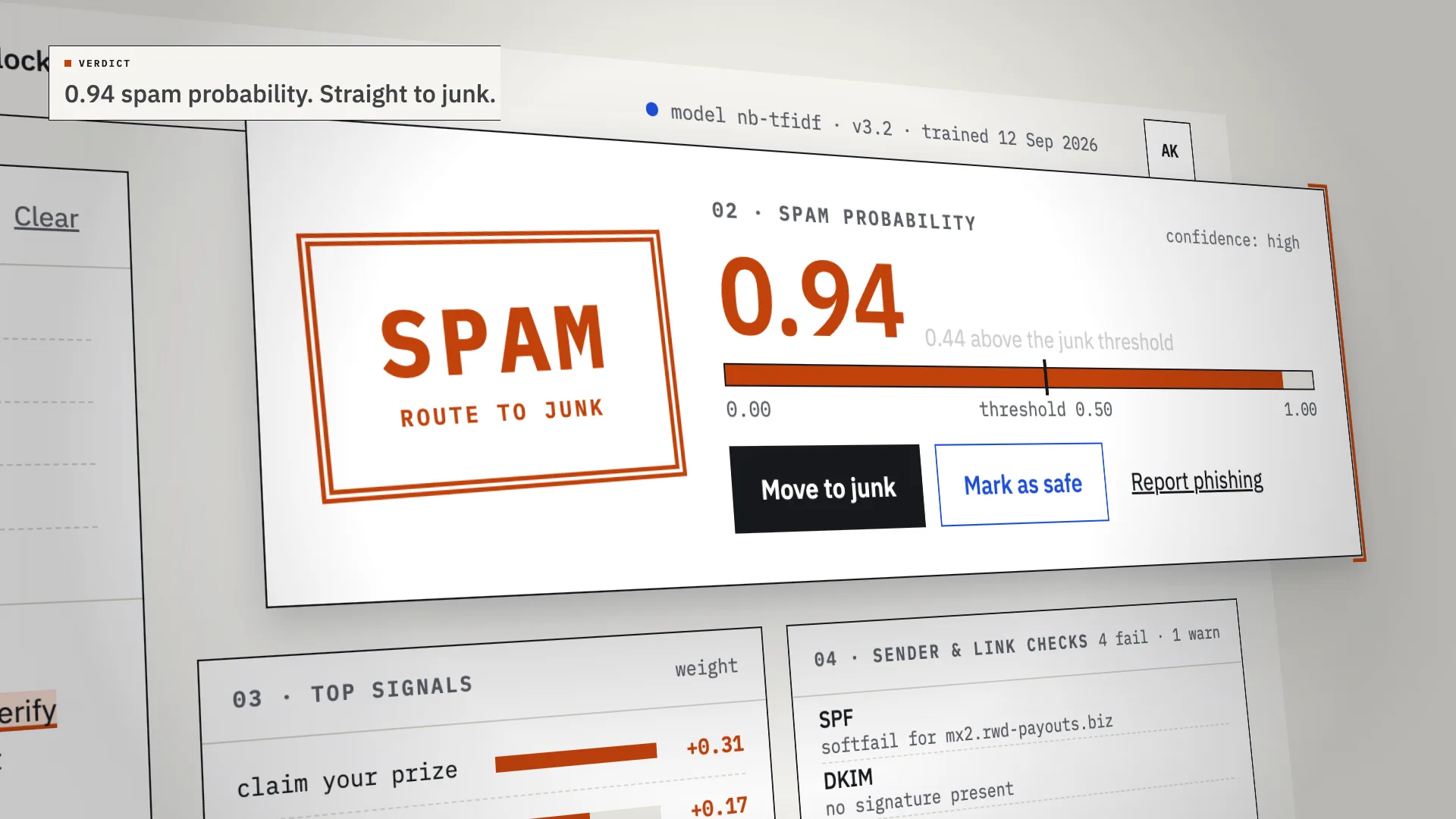
LiveAn AI spam classifier that shows its work: every verdict comes with the phrases, sender checks and links that decided it.
Chalkline
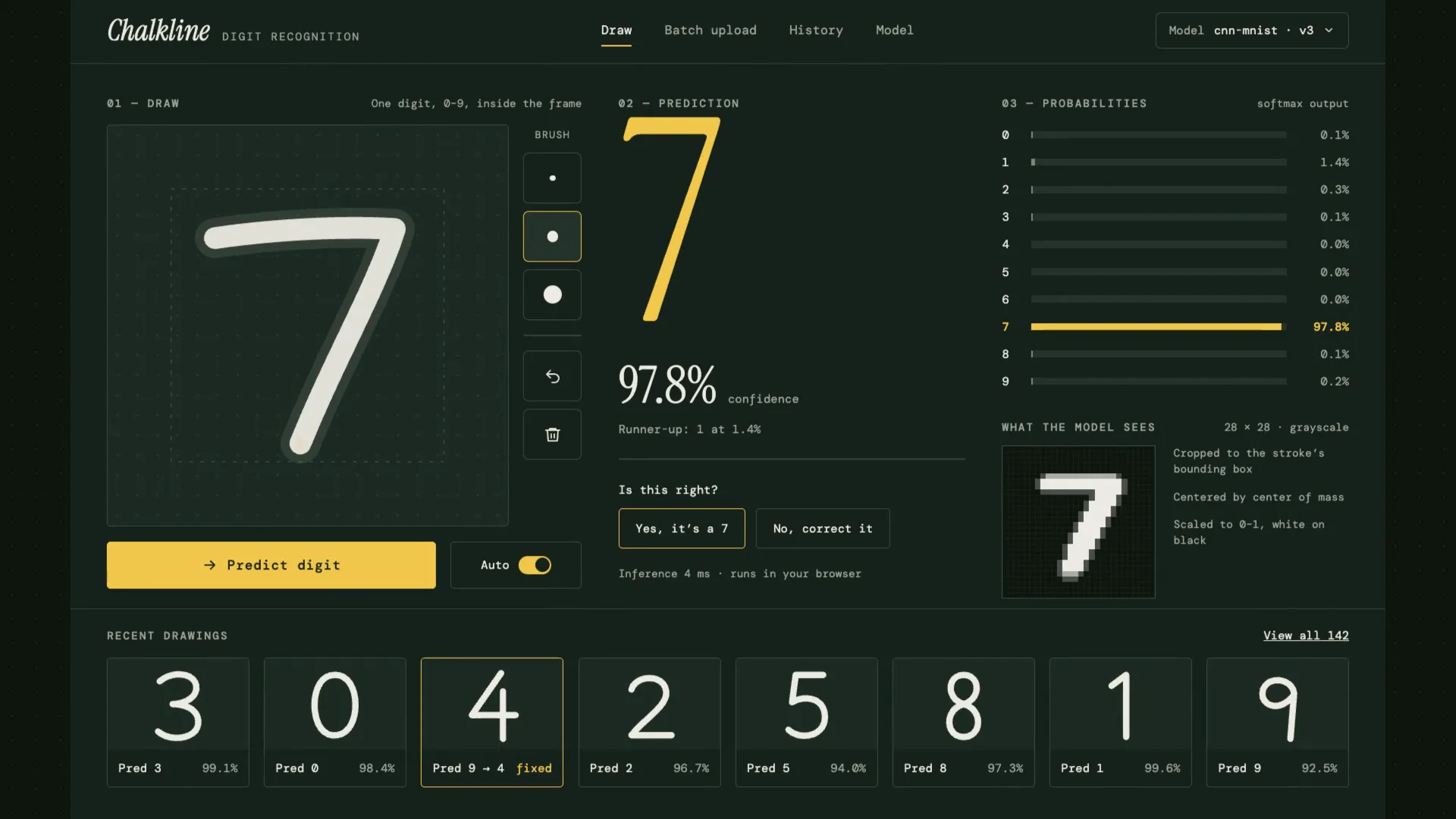
LiveA handwritten digit recognizer that shows its reasoning: your chalk stroke becomes the 28×28 pixels the model sees, then ten probabilities, then an answer.
Have a project like this?
Tell me what you want to build. We map it on a 30-minute call.